
We've been building AI in finance long before it was everywhere, and we're not slowing down. Built into how you work, AI in BILL gives you a new level of control and accuracy—so you can move fast and make strategic moves with confidence.

Join thousands of businesses who use BILL



AI built for finance
You don't need another generic AI feature to manage. You need a finance platform that actually simplifies your day. BILL builds AI thoughtfully into your workflow, centered around total accuracy, enterprise security, and full control.


Shift from manual processing to high-value strategic work, while keeping final decision-making power.
Catch anomalies, suspicious bill variances, and potential fraud before money moves out the door.
Manage and update how AI works from a centralized hub.
Why choose BILL


Help your team focus on strategy by automating nearly all manual tasks and arming them with up-to-date data needed to make decisions with confidence.

Make the most of your money movement with insights and guidance gained from $2T in transactions and decades of financial expertise.¹

AI in BILL is built on core principles of security, control, and accuracy. So you can make confident decisions knowing you're safe from fraud and always in control.

Based on a BILL survey conducted in January 2026.
AI-powered features built for finance teams

Quickly surface financial data and run queries through major LLMs via a manual MCP connection.

Toggle AI capabilities on or off and see a complete audit log of every AI action. Few AP or finance softwares have this level of dedicated AI governance.

24/7 protection automatically flags unusual bill amounts during the approval process.

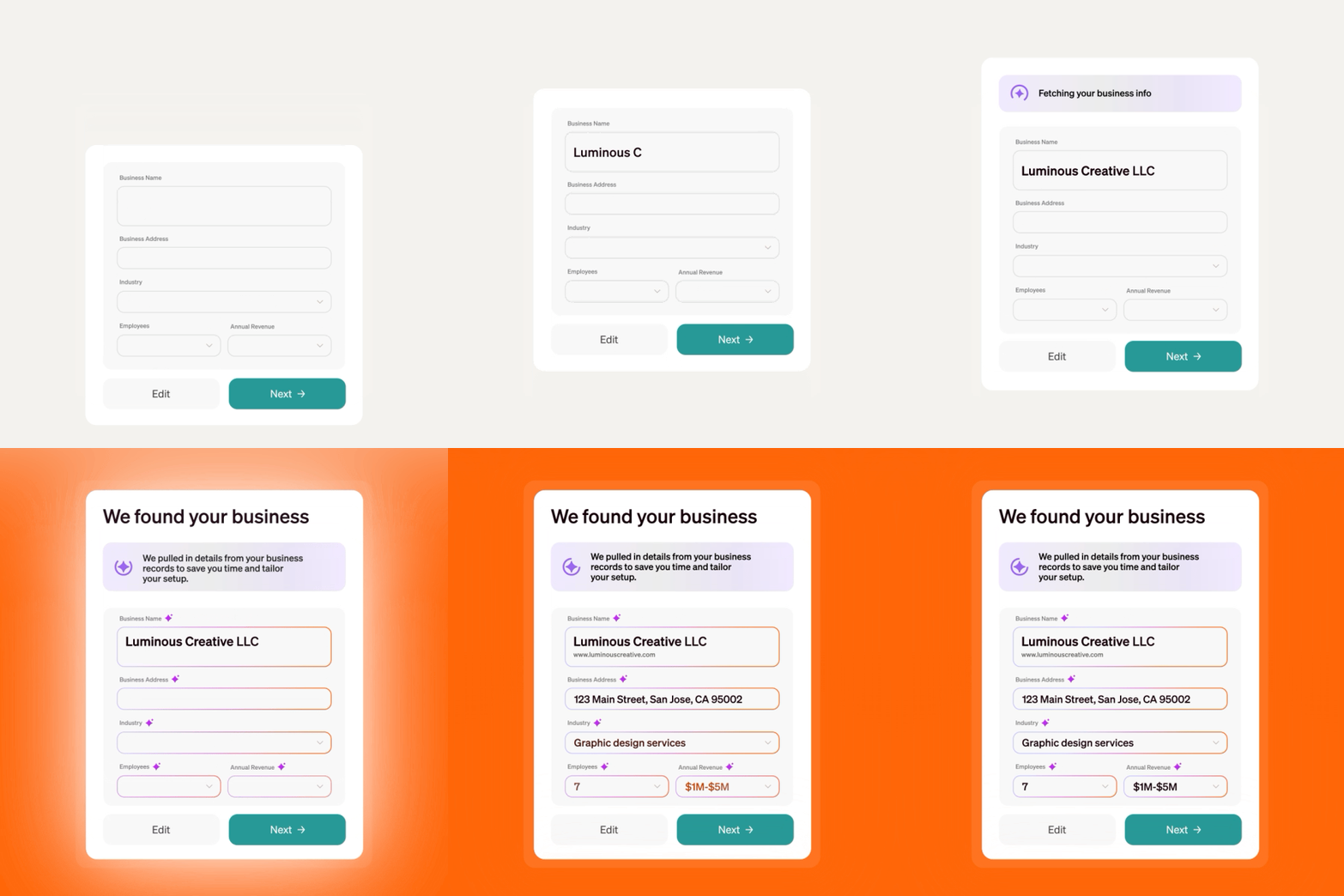
Before you can blink, BILL pre-fills your business profile from verified third-party data and recommends the right product bundle.


What our customers are saying
AI resources
Learn why nearly half a million businesses trust BILL AI.


At BILL, we believe SMBs and accounting firms shouldn’t have to fight harder than large corporations just to keep operations moving. We’re putting AI to work to accelerate touchless finance, removing the daily friction so you can focus on what matters most.
What would you do with an extra 21 hours this week? AI tools are saving financial operations employees time, but that's only part of the story. See the top takeaways from our survey of 500 finance leaders at small and midsize organizations.

Uncover what 200+ accounting firm leaders really think about AI. From awareness and adoption to impacts on business models and pricing, go deep with four volumes revealing how AI is transforming accounting firms.
a payment?
To accept this invitation, please use the link below.


a payment?
To accept this invitation, please use the link below.
a payment?
To accept this invitation, please use the link below.
a payment?
To accept this invitation, please use the link below.
a payment?
To accept this invitation, please use the link below.
Frequently asked questions
BILL has been leveraging AI technology for years, well before it became mainstream. AI isn’t just a flashy feature—it’s an important business technology that works best when it’s embedded at the platform level. So we’re continuing to invest in AI, the same way we've invested in automation, to bring our customers the latest, most advanced technology that will help them save time, mitigate risk, and grow their businesses how they want.
BILL has been leveraging AI technology for years, well before it became mainstream. AI isn’t just a flashy feature—it’s an important business technology that works best when it’s embedded at the platform level. So we’re continuing to invest in AI, the same way we've invested in automation, to bring our customers the latest, most advanced technology that will help them save time, mitigate risk, and grow their businesses how they want.
BILL takes data privacy and security extremely seriously. Our use of AI adheres to the same strict security and data privacy requirements that all our sensitive data adheres to. For more information, feel free to check out our privacy notice and Security Center.
BILL takes data privacy and security extremely seriously. Our use of AI adheres to the same strict security and data privacy requirements that all our sensitive data adheres to. For more information, feel free to check out our privacy notice and Security Center.
BILL reimagines AI—not as a tool siloed on our platform, but as an integrated part of where work actually happens.
In addition, BILL has greater scale and data richness. BILL's AI delivers unparalleled accuracy by leveraging rich historical data across a broad range of workflows, software, and payments at unmatched scale.
AI and LLMs in financial operations automate and accelerate processes that were traditionally manual in nature. AI in FinOps, in general, can include financial operations efficiency, predictive analytics, security and fraud detection, and Chatbots and generative AI assistants.
AI and LLMs in financial operations automate and accelerate processes that were traditionally manual in nature. AI in FinOps, in general, can include financial operations efficiency, predictive analytics, security and fraud detection, and Chatbots and generative AI assistants.
Both help reduce payment risk, but they address different problems.
Duplicate bill detection helps prevent paying the same bill twice. It compares a new bill with bills already in BILL, using details such as the vendor, invoice number, due date, amount, and document data.
Fraud protection helps identify suspicious activity. It looks for broader risk signals, such as unusual transactions, changes to vendor or payee information, and other anomalies.
The simple distinction: duplicate detection asks, “Have we already processed this bill?”, while fraud protection asks, “Does this activity look suspicious?”
Availability and pricing for BILL's W-9 automation depend on your BILL plan and package. Your account team or BILL support can confirm whether it is included and explain any applicable charges.
Availability and pricing for BILL's W-9 automation depend on your BILL plan and package. Your account team or BILL support can confirm whether it is included and explain any applicable charges.
BILL’s AI is designed to support accountants, never replace them.
Today’s finance professionals are more than book closers—they are strategic partners, growth enablers, and trusted advisors. BILL AI handles repetitive tasks like data entry and invoice processing, freeing up time for high-impact work like strategy, analysis, and decision-making.
In fast-paced environments, accuracy and compliance are critical. BILL AI keeps humans in control, ensuring trust and oversight remain intact.
It’s not about replacing the accountant—it’s about elevating the role. With BILL AI, finance teams work smarter, move faster, and add more value than ever.
Think of an AI agent as a digital coworker. It has a goal or objective, can sense its environment, plan actions, use tools or APIs, and operate independently. Like a human colleague, it knows when to escalate questions or defer decisions/tasks when appropriate.
Think of an AI agent as a digital coworker. It has a goal or objective, can sense its environment, plan actions, use tools or APIs, and operate independently. Like a human colleague, it knows when to escalate questions or defer decisions/tasks when appropriate.
To learn more about AI in BILL, continue to check on this page. We will also be sending out AI updates in our monthly newsletters.
To learn more about AI in BILL, continue to check on this page. We will also be sending out AI updates in our monthly newsletters.
AI in BILL helps code your invoices by reading your invoices and predicting key fields, including: account, amount, department, class, location, customer, and job.
By learning from your previous bill entries and comparing them with the invoice you just uploaded, AI in BILL helps you spend less time entering line items and more time reviewing exceptions. You review, edit, or undo the suggestions before finalizing the bill. BILL handles the rest.
For common invoice fields, BILL's extraction is approximately 99% accurate under tested conditions.* Results vary by invoice layout and data quality, and your team keeps final review and control.
*Based on BILL’s analysis of the top 20% of common bills assuming doc layouts and user behaviors stay consistent. Results will vary by invoice layout and data quality.
AI in BILL helps reduce W-9 follow-up without giving up review and control. It can contact vendors to request W-9 forms, follow up with vendors, collect and organize forms, validate names and taxpayer identification numbers, flag mismatches, and update vendor information.
Your team still reviews and approves the final information. The agent automates the repetitive work around chasing, tracking, entering, and correcting W-9 data. We estimate that AI in BILL eliminates more than 80% of the steps in a typical collection and validation process.*
*Based on BILL's analysis of a typical 12-step W-9 collection process.
1As of October 2026.
2Data based on 1 year of invoices for key extraction fields (invoice date, invoice number, and amount) where the field was contained in the invoice.